Athens and Xanthi: An Evening Full of Science
Athena Research Center introduced the public to cutting-edge applications of Artificial Intelligence, Robotics, data science, cultural heritage, health and environmental technologies.
09-10-2026
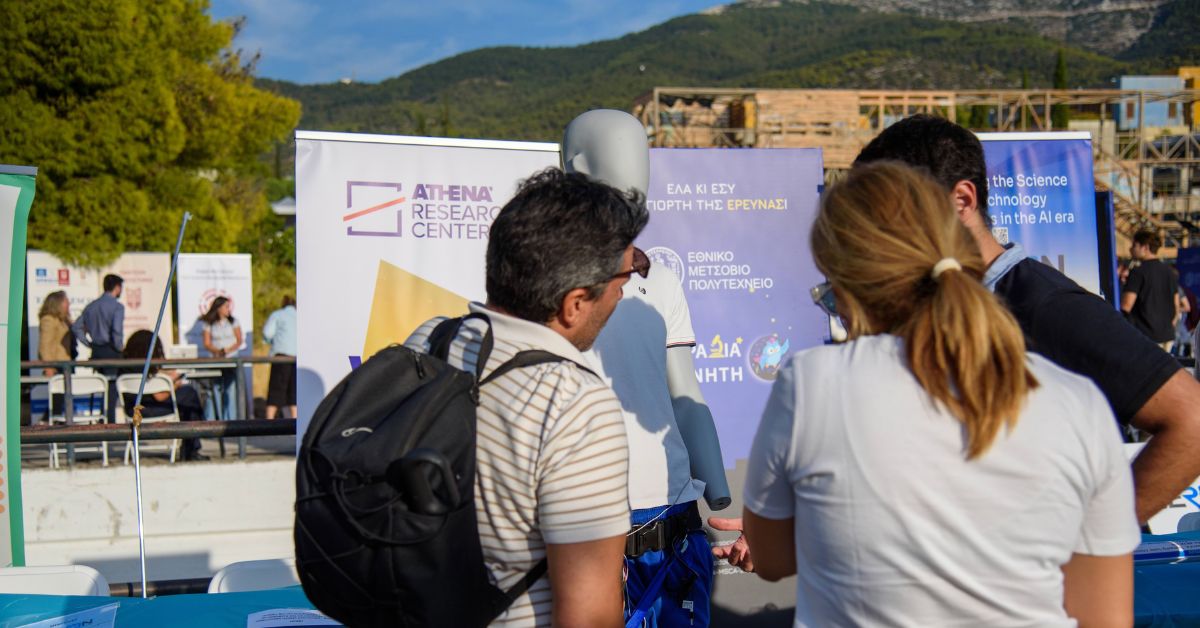
What happens when research opens its doors to the public for one evening?
A child can become an archaeologist for a few minutes. See a real meteorite up close. Discover how a monument acquires its own digital twin. Explore a Greek Large Language Model or see how a robotic system can help someone walk.
On Friday, 25 September 2026, all these experiences took place almost simultaneously in Xanthi and Athens, as Athena Research Center participated in two Researchers’ Night events.
In Xanthi, the Mediterranean Researchers’ Night – MEDNIGHT returned to Athena’s premises at the Kimmeria University Campus. In Athens, the Center’s research teams participated in European Researchers’ Night at the Zografou Campus of the National Technical University of Athens.
Two cities, different experiences and one shared goal: to make research more visible, understandable and accessible to society.
In Xanthi, a Growing Tradition
For the third consecutive year, Athena’s premises in Xanthi were transformed into an open space for science and discovery. More than 20 activities and interactive experiences, presented by Athena and collaborating organisations, brought together a wide range of scientific fields, spanning Artificial Intelligence and Robotics, archaeology, health and the environment.
In Language Technology and Artificial Intelligence, visitors were introduced to Krikri, the open Greek Large Language Model, as well as the next generation of models being developed at the Pharos AI Factory.
In Cultural Heritage, emerging technologies revealed another dimension of their potential. ARTEMIS TWIN EU demonstrated how monuments can acquire dynamic Digital Twins, while ARGUS showed how sensors, drones, satellite data and Artificial Intelligence can contribute to the early detection of risks and the protection of cultural heritage sites.
Ancient textiles also met modern technology. TEXTaiLES uses AI, Robotics and digital technologies to document and protect textile heritage, while FiberScope demonstrated how even a smartphone camera can be used to identify textile fibres. Through UNICHE, visitors discovered another approach to creating interactive digital experiences centred on cultural heritage.
Research also addressed issues directly connected to everyday life. AQUAMON presented AI and Robotics technologies for monitoring urban water quality. ThrombUS+ highlighted emerging technologies for thrombosis prevention, while the interactive game Vitalia connected technology with education for healthier living.
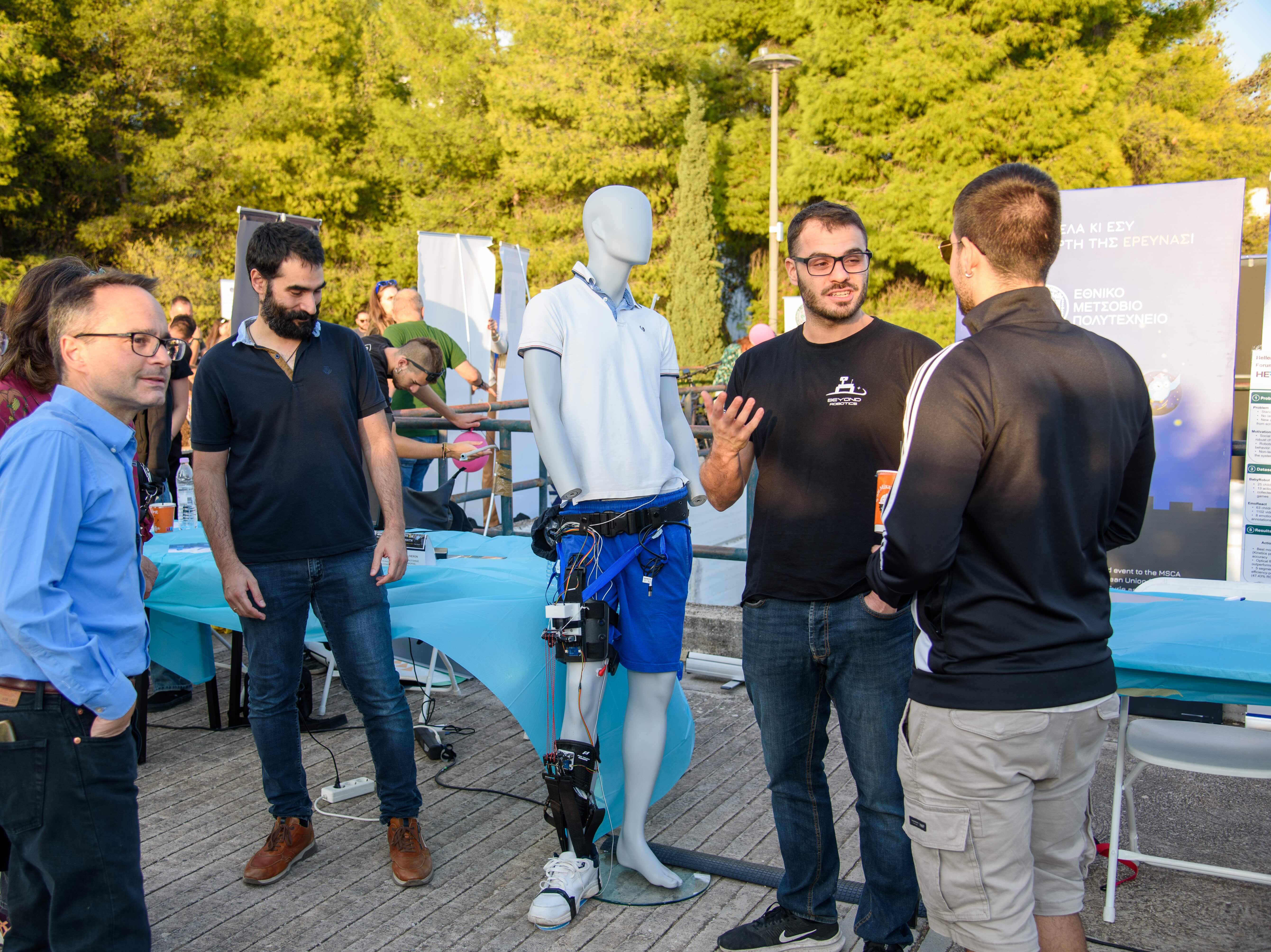
And somewhere between cutting-edge research and play, younger visitors became archaeologists for a while, explored minerals and rocks, saw a real meteorite fragment and took part in hands-on STEM activities. The 5th Retro Computer Exhibition added another dimension to the experience, reminding visitors that exploring the future of technology is also an opportunity to revisit its past.
In Athens, Technology in the Hands of the Public
On the same evening, at the Zografou Campus of the National Technical University of Athens, Athena’s researchers welcomed visitors to European Researchers’ Night.
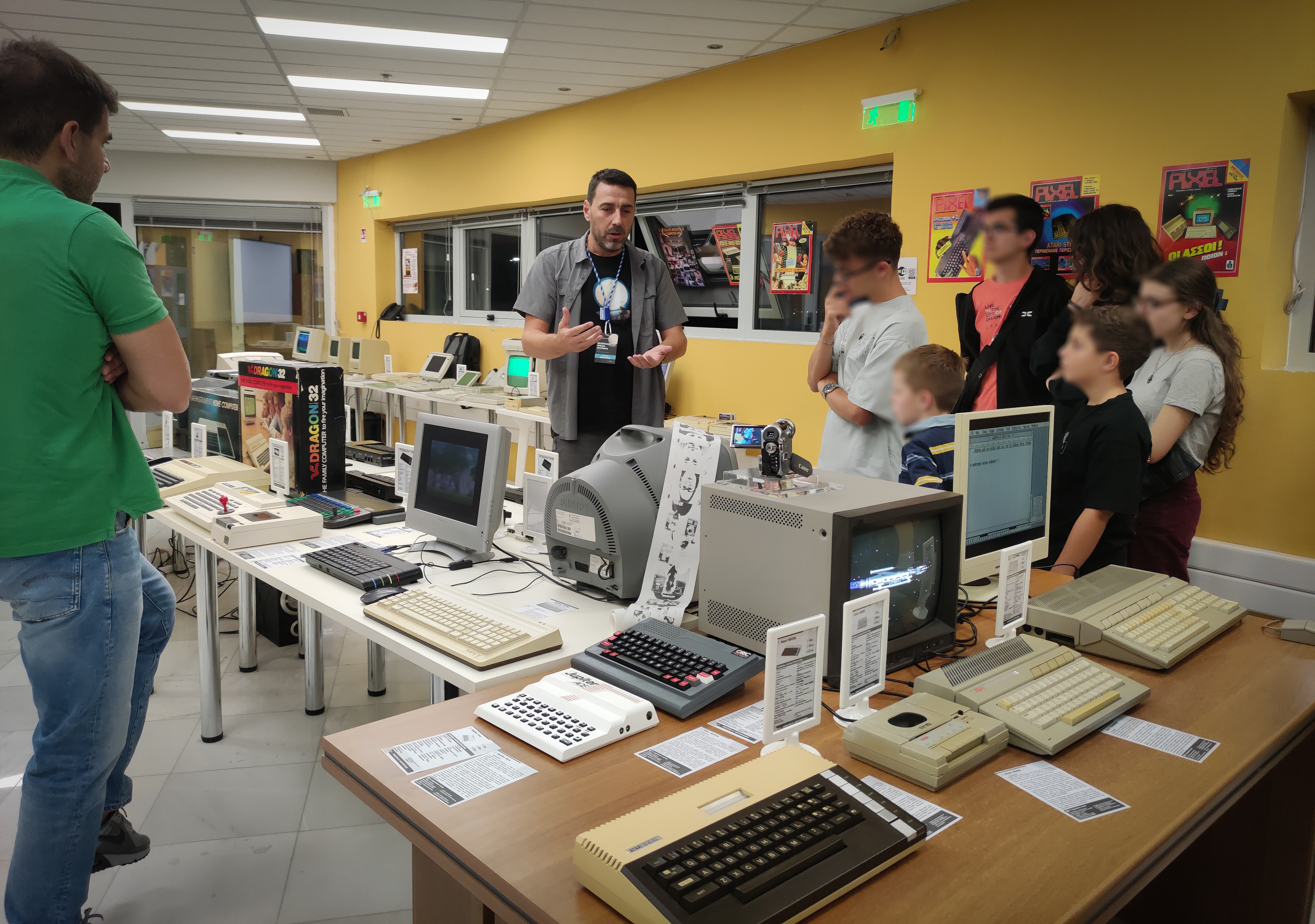
Here, Robotics became tangible through robotic applications and an exoskeleton-assisted walking system, while Artificial Intelligence “spoke” Greek through Krikri.
In Education, GenAI-EduMap highlighted the potential of Generative Artificial Intelligence in the learning process. In Data Science, DataGEMS gave visitors the opportunity to explore modern approaches to data discovery, exploratory analysis, management and search through practical demonstrations.
At the same time, through digital storytelling experiences focused on climate change and urban planning, visitors were able to participate actively and discover how research can transform complex issues into more accessible and understandable experiences.
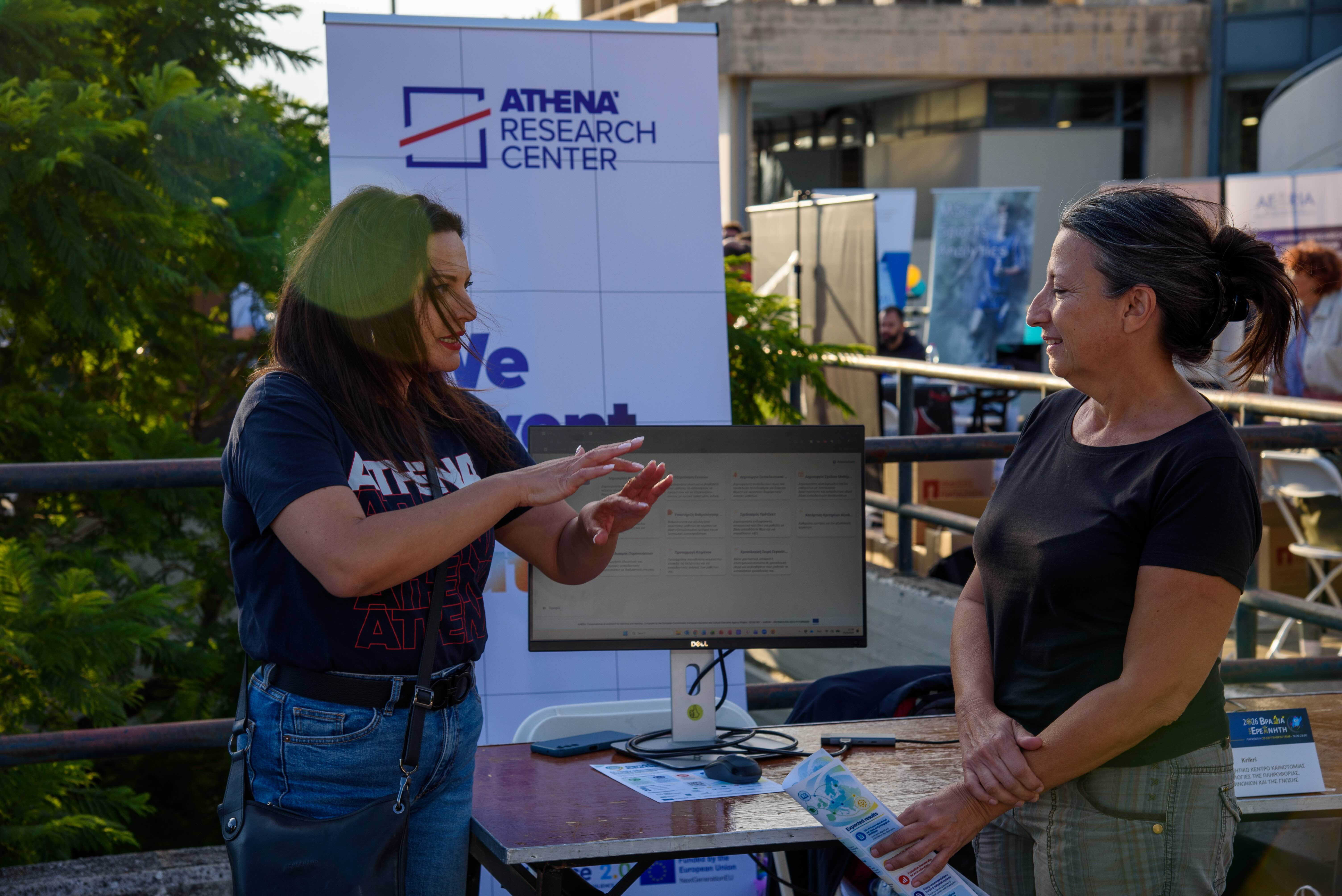
Athena’s participation in Athens and Xanthi highlighted the Center’s ongoing commitment to connecting research with society. In Xanthi, MEDNIGHT is becoming an established local tradition, while in Athens, Athena’s continued presence at Researchers’ Night brings its research teams closer to the public.
An encounter with science that continues to grow, evolve and inspire the next generation.