Katerina Pastra on ERT: Artificial Intelligence in the family and the challenges for parents and children
The need for responsible and mindful use of AI by the younger generation
01-07-2026
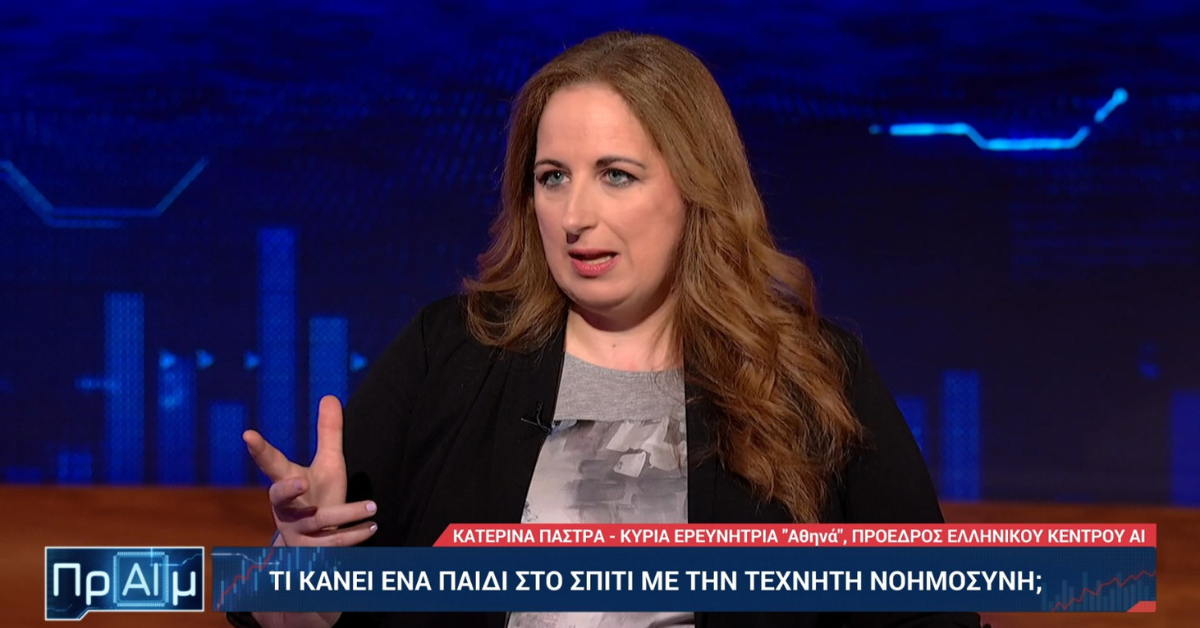
Katerina Pastra, Principal Researcher at the Athena Research Center and President of the Hellenic Artificial Intelligence Society, took part in a particularly insightful and timely discussion on the ERT TV program Prime.
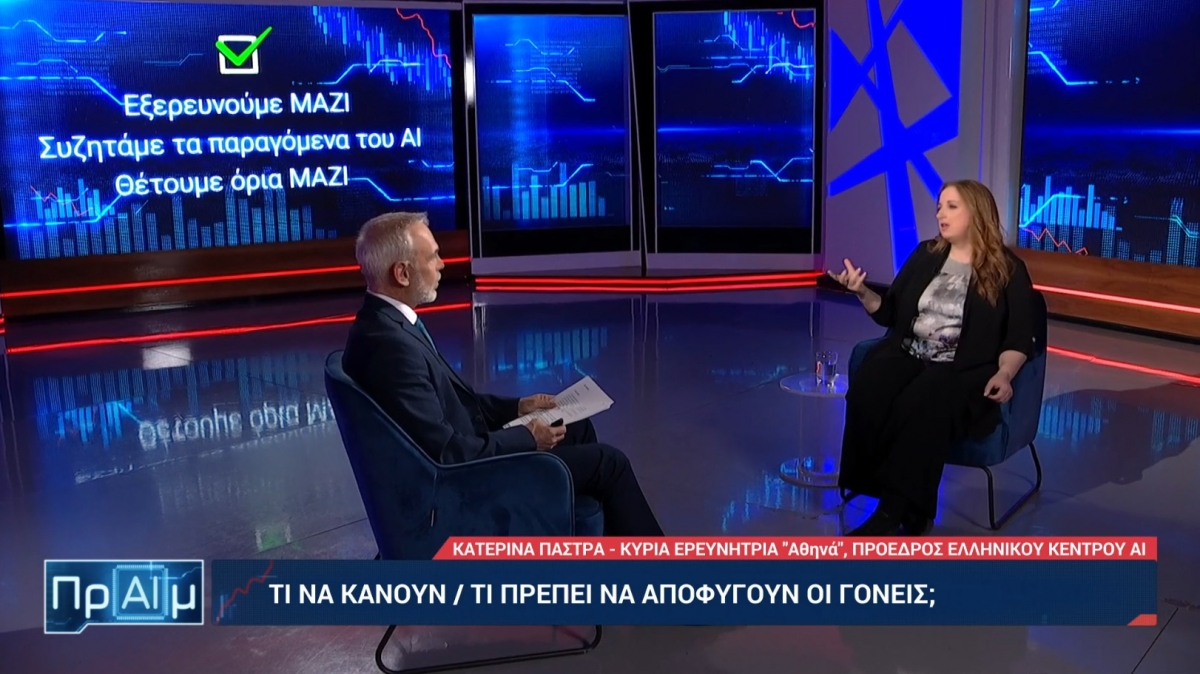
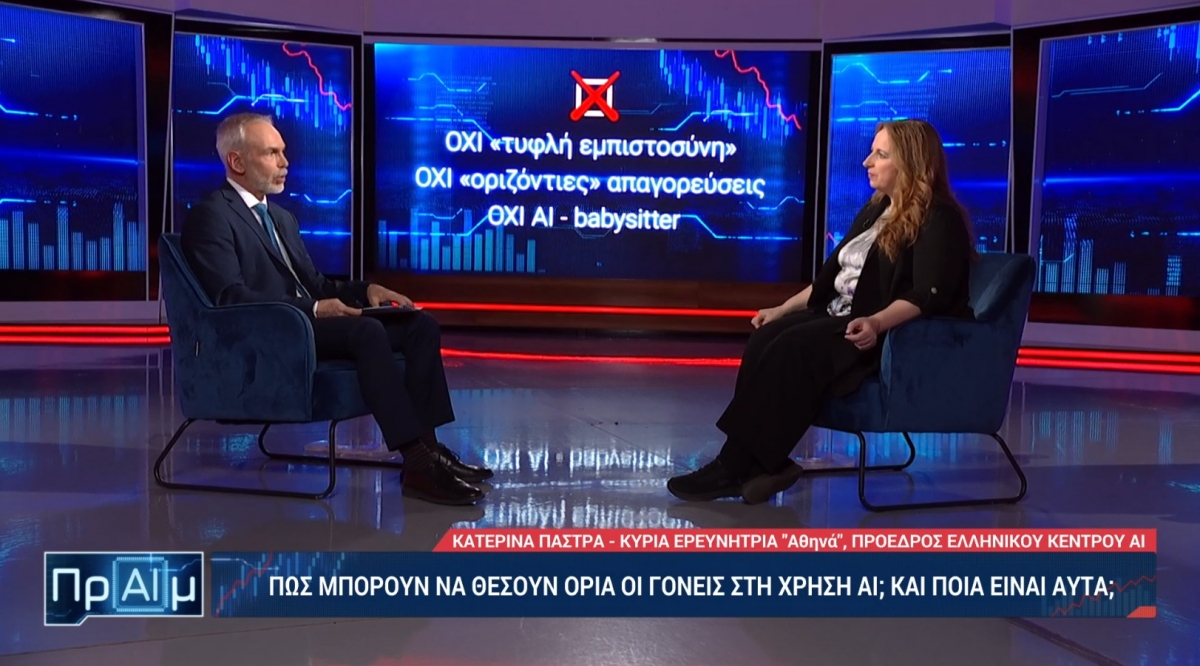
The discussion focused on a highly relevant issue for modern families: the growing integration of Artificial Intelligence into children’s everyday lives and the challenges this creates for parents. A key message highlighted during the discussion was that parents should explore these technologies together with their children, engage in open dialogue about their outputs, and jointly shape both the way they are used and the boundaries around their use.
Ms. Pastra emphasized that children actively interact with AI systems, using them primarily as search tools to address questions that concern them, but also as a means of informal psychological support in their daily lives. “Parents need to engage in dialogue with their children and explore their understanding of these systems, both to become informed themselves and to ensure their children’s digital safety,” she noted.
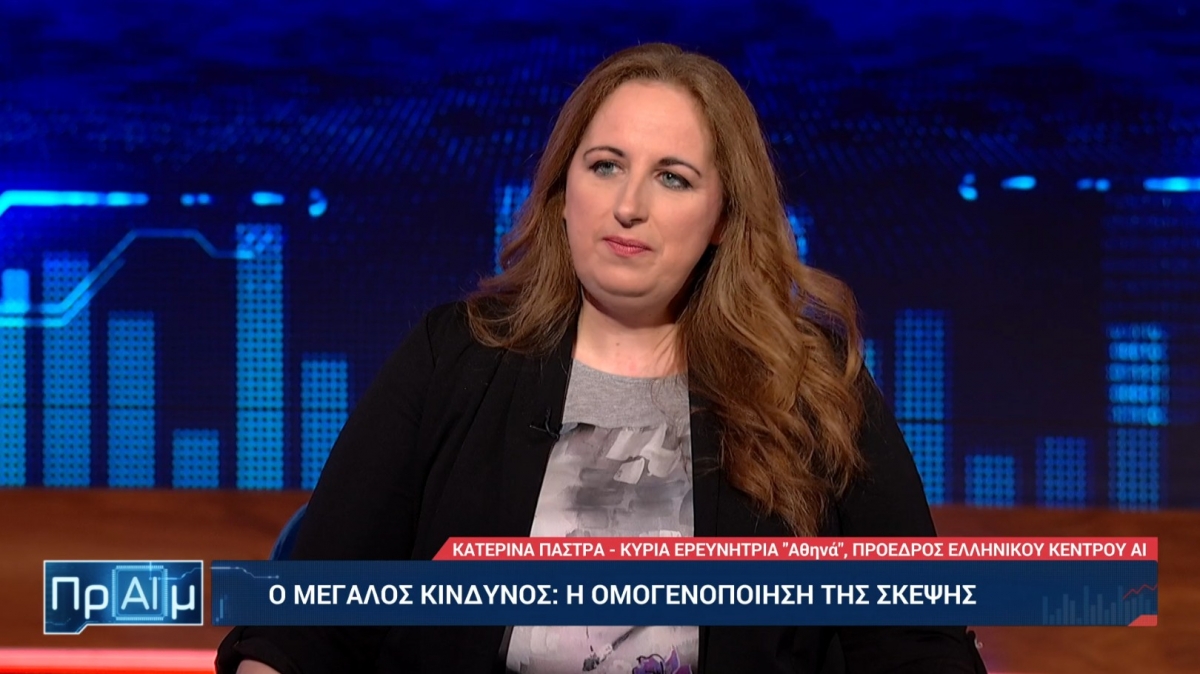
She further pointed out that while the ease of access to instant answers creates new learning conditions, it also introduces risks. One such risk is the superficial understanding of knowledge and the possibility of receiving inaccurate information that cannot always be critically assessed. According to Ms. Pastra, this leads to “the risk of homogenization of knowledge, where children receive immediate answers to questions they may not fully understand, without engaging deeply with the content.”
“The real danger lies in becoming accustomed to a superficial mode of thinking and behavior,” she added. “Just as solution manuals in the past enabled copying without understanding, AI tools today can be used in a similar way. Children must be guided to understand that this is not an appropriate use.”
An excerpt from the interview is available at: https://www.ertflix.gr/#/details/ERT_LS029096_E0 (12:24–23:00), under the episode titled “An insightful look at the day’s big issues and their impact”, broadcast on Wednesday, May 13, 2026.
Most popular
01-07-2026