Sellis - Ioannidis on Artificial Intelligence
Featured in The Key Issue, the special supplement published with the Sunday edition of TO VIMA
25-02-2026
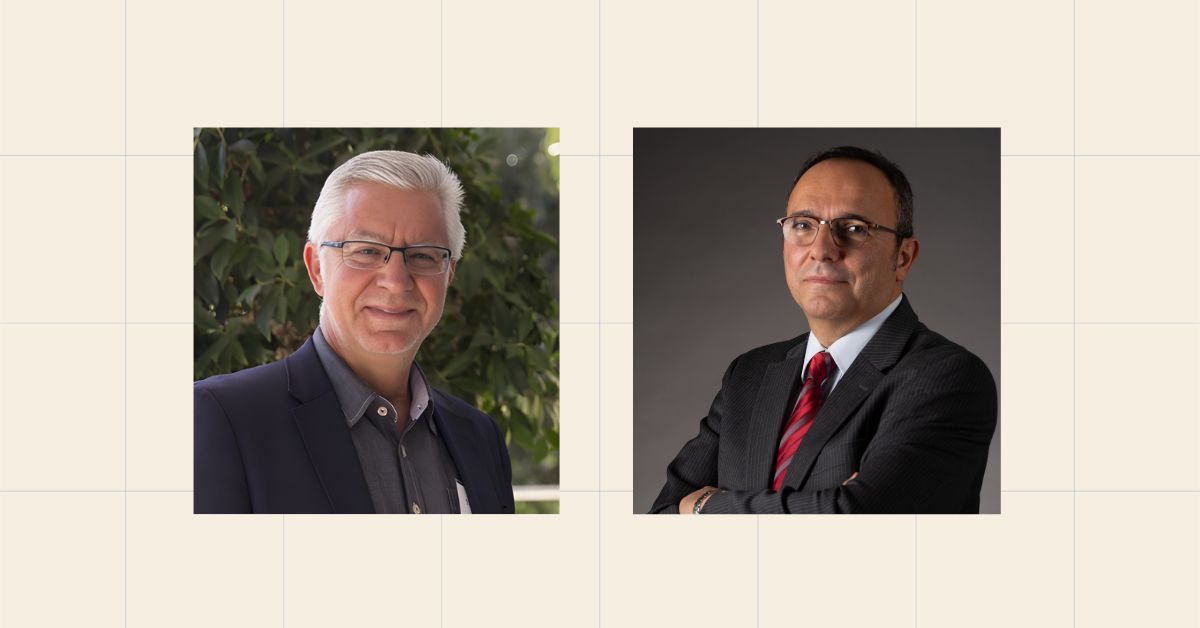
“Today, we tend to label everything as Artificial Intelligence - and I consider that dangerous”. With this remark begins a particularly meaningful discussion on Artificial Intelligence, featured in the collective volume “The Key Issue”, published as a special supplement with TO VIMA on Sunday, February 15, 2026.
In this edition, distinguished computer scientists former President of the Athena Research Center Professor Yannis Ioannidis and Dr. Timos Sellis, Director of the Archimedes Unit at the Athena Research Center, reflect on the “continuation of the Fourth Industrial Revolution” and its impact on Greek society and the economy.
With long-standing academic and research careers in Greece and abroad, both scientists consistently rank among the top 2% most influential researchers worldwide in their field. In their discussion, they seek to demystify Artificial Intelligence and place it on a realistic footing. As they emphasize, AI is neither “magical” nor an autonomous mind; it primarily consists of statistical models that make predictions based on vast volumes of data.
Excessive expectations as well as the uncritical use of tools such as large language models entail risks, particularly when introduced wholesale into schools or public administration without clear objectives and an appropriate implementation framework.
“The critical question is not whether ChatGPT should enter schools, but how it should be introduced and with what goals”, they note. Technology can substantially enhance the educational process, provided it functions as a tool for cultivating critical thinking and creativity rather than as an “easy solution” that replaces genuine learning effort.
At the same time, the broader picture is clear: AI is already transforming key sectors such as healthcare, energy, transportation, and agri-food. It does not simply eliminate professions, it reshapes them. Within this evolving landscape, Greece does not need to become “the next Google or OpenAI.” As they characteristically remark, “we compete in the Champions League of science”. The real challenge is not imitation but leveraging domestic talent and strategically investing in areas where the country holds comparative advantages.
Their perspective is neither technophobic nor uncritically techno-enthusiastic. Rather, it is an invitation to sobriety, strategic thinking, and meaningful public policy in addressing the challenges and opportunities of Artificial Intelligence.
The full article is available in Greek in TO VIMA - The Key Issue 2026.
Most popular
01-07-2026